





PCS BMS and EMS: Understanding Their Roles in a Battery Energy Storage System
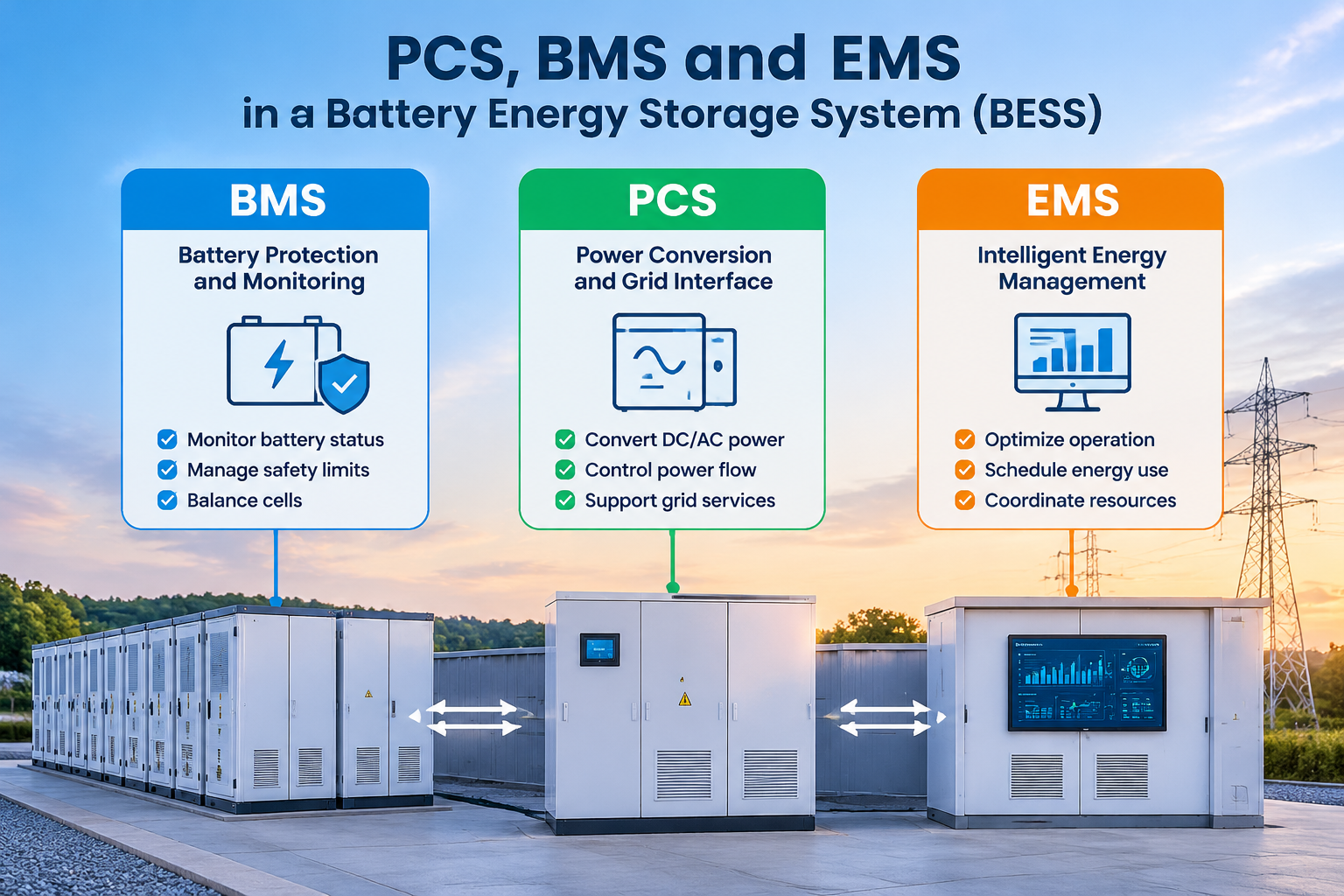
PCS, BMS, and EMS are three essential components of a Battery Energy Storage System (BESS), each performing a distinct but interconnected function. The Battery Management System (BMS) monitors battery performance, manages operating conditions, and ensures battery safety. The Power Conversion System (PCS) handles bidirectional power conversion between DC and AC, while controlling power flow between the battery and the grid or connected loads. The Energy Management System (EMS) coordinates the overall energy storage operation by optimizing energy distribution, charging and discharging strategies, and system performance. For reliable and efficient BESS operation, these three systems must communicate and exchange data seamlessly while maintaining essential local protection and control functions, even when communication interruptions occur.
BMS: Battery Monitoring, Management and Safety Protection
The Battery Management System (BMS) plays a critical role in monitoring battery conditions and maintaining safe operating performance within a Battery Energy Storage System (BESS). Depending on the system configuration, the BMS can monitor individual battery cells, modules, racks, or complete battery containers. Its key functions include collecting voltage, current, and temperature data, calculating the State of Charge (SOC) and State of Health (SOH), performing cell balancing, regulating charging and discharging limits, identifying abnormal operating conditions, and initiating protective measures when necessary.
When evaluating a BESS solution, procurement teams should look beyond the basic availability of a battery management system and assess whether its design meets the project's operational reliability and maintenance requirements. Important considerations include how the BMS detects and isolates battery faults, stores operational and alarm records, communicates protection thresholds to the Power Conversion System (PCS), and responds to communication failures. As a safety-critical component, the BMS provides essential battery-level monitoring and protection. However, having an integrated BMS alone does not guarantee that the entire battery energy storage installation complies with applicable local safety standards, regulations, and grid requirements.
PCS: Bidirectional Power Conversion and Grid Integration
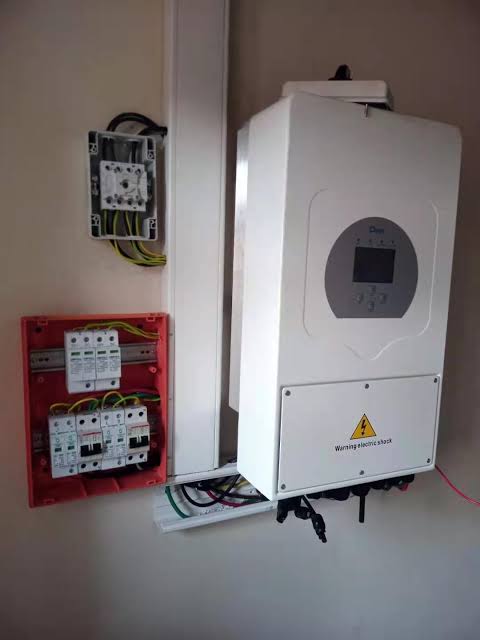
The Power Conversion System (PCS) is a key component of a Battery Energy Storage System (BESS), serving as the interface between the battery's DC power and the site's AC electrical network. Also known as a bidirectional inverter, the PCS converts DC electricity from the battery into AC power for connected loads or grid export. During battery charging, it reverses the conversion process, transforming AC electricity into DC power for energy storage. Within its rated operating capacity, the PCS also regulates active and reactive power, enabling applications such as peak shaving, photovoltaic (PV) integration, backup power supply, and grid support services, subject to system configuration and applicable grid regulations.
Selecting the right PCS capacity requires a detailed assessment of the project's electrical and operational requirements. Key factors include continuous power demand, short-term peak loads, power factor, motor starting current, grid voltage and frequency compatibility, transformer capacity, harmonic distortion limits, and islanding operation requirements. Battery energy capacity and PCS power rating must also be evaluated together. For example, a BESS with a 2 MWh battery may still fail to meet its target power output in MW if the connected PCS is undersized. Proper PCS selection is therefore essential for achieving the required power delivery, system stability, and overall energy storage performance.
EMS: Intelligent Energy Management and System Optimization
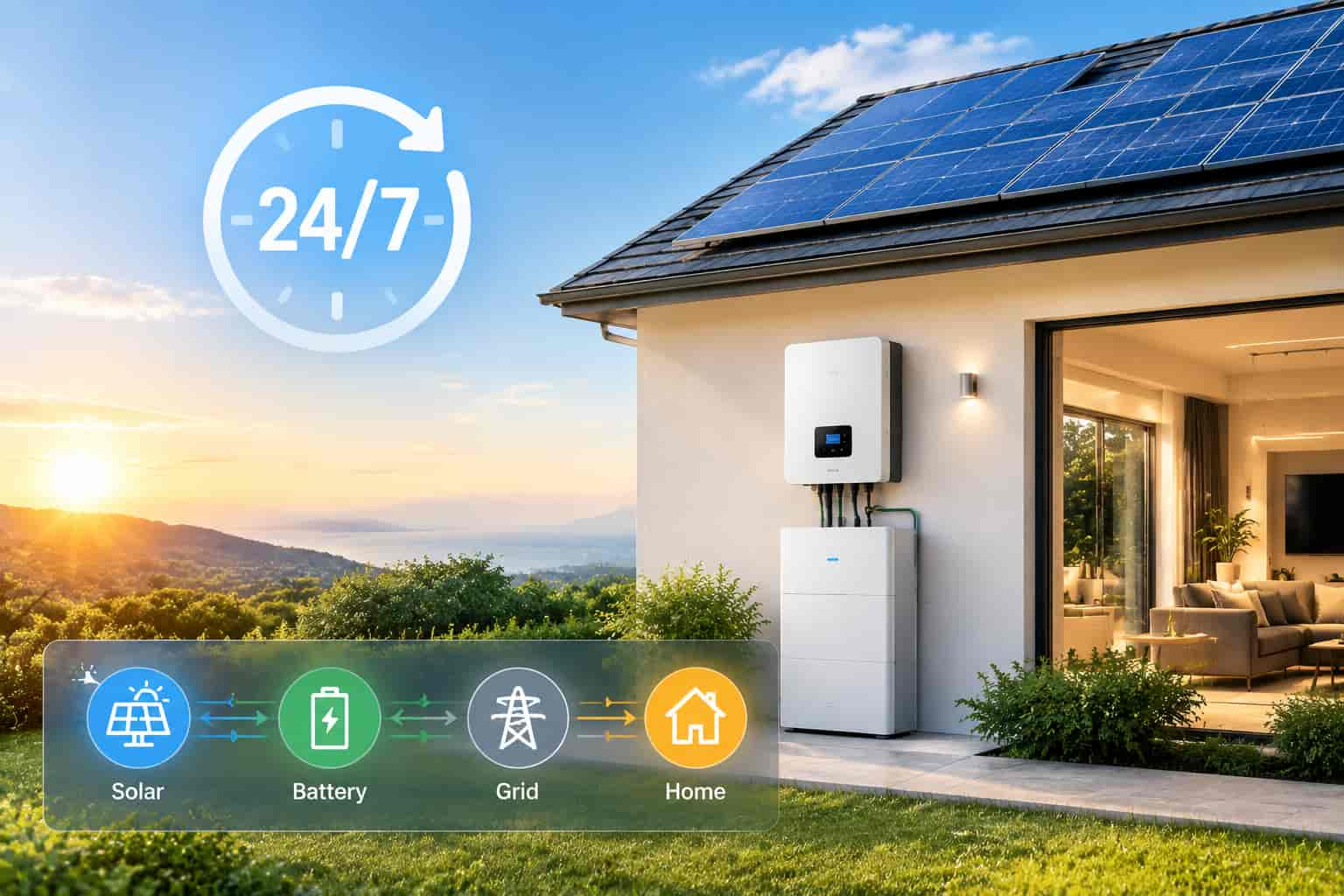
The Energy Management System (EMS) serves as the central control and optimization platform of a Battery Energy Storage System (BESS). It analyzes operational data, energy consumption patterns, electricity tariffs, and site requirements to coordinate different energy resources and determine the most efficient operating strategies. Depending on system demand and predefined control objectives, the EMS manages battery charging and discharging schedules, prioritizes solar PV energy utilization, reduces peak electricity demand, maintains backup power reserves, and adjusts non-critical loads when necessary. It can also coordinate the operation of battery storage systems with generators, electric vehicle (EV) charging infrastructure, and other distributed energy resources.
To ensure reliable energy management, an EMS should incorporate predefined control limits and contingency strategies rather than relying entirely on external data or cloud-based services. System designers need to establish alternative operating procedures for situations involving network interruptions, unavailable smart meter readings, inaccurate weather forecasts, or missing electricity price information. For applications requiring energy resilience and backup power, local control functions must remain operational independently of external communication services. These controls should maintain a predefined safe operating condition while protecting sufficient battery capacity for critical loads. This approach helps improve BESS reliability, operational flexibility, and energy security.
BESS Control Hierarchy Under Normal and Fault Conditions
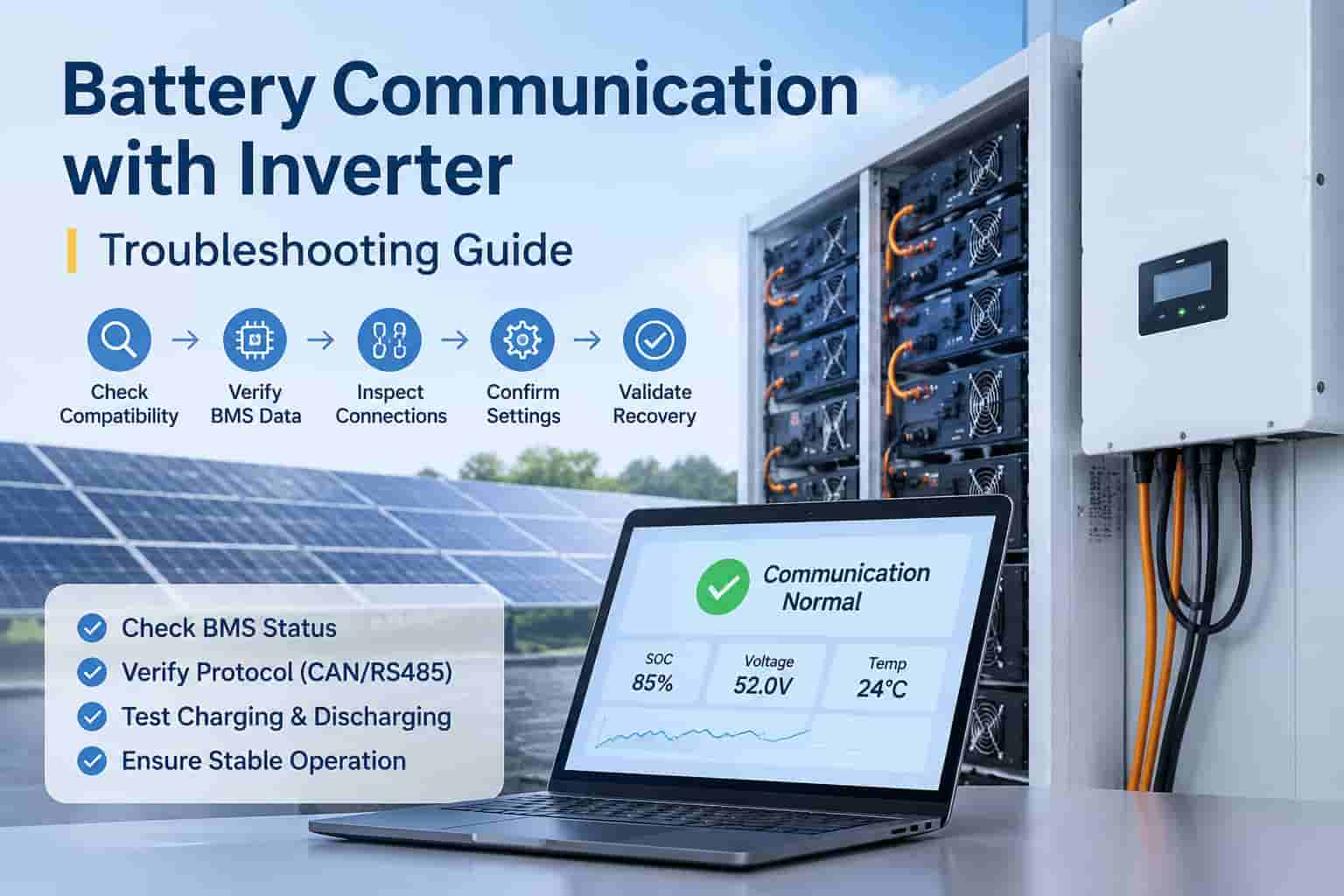
During regular operation, the Energy Management System (EMS) coordinates the Battery Energy Storage System (BESS) according to electricity pricing, energy demand, and generation forecasts. It sends charging or discharging instructions to the Power Conversion System (PCS), which executes these commands only when they remain within its specified AC and DC operating parameters. Meanwhile, the Battery Management System (BMS) continuously monitors battery conditions and communicates the permitted charging and discharging limits. These restrictions may be adjusted in response to temperature variations, battery State of Charge (SOC), or detected abnormalities. Independent electrical protection mechanisms provide an additional layer of safety by responding directly to fault events, ensuring that system protection requirements always take priority over energy optimization commands.
When a BESS operates in island mode or experiences a communication interruption, its safety and stability must not rely solely on remote monitoring platforms or cloud-based control. A clearly defined local control strategy is essential. This should specify the operation of local controllers, default PCS settings, BMS protection thresholds, automatic load-shedding priorities, and conditions for generator startup. Comprehensive commissioning and functional testing should also simulate potential failure scenarios, including grid outages, controller malfunctions, BMS-to-PCS communication failures, unavailable meter readings, and auxiliary power interruptions. Although certain faults may result in reduced system capacity or limited functionality rather than continuous full-power operation, the expected system response must be clearly established, documented, and verified before project commissioning and final handover.
Communications and Cybersecurity Considerations for BESS
When planning a Battery Energy Storage System (BESS), buyers should confirm supported communication protocols, such as Modbus, IEC 61850, and DNP3, as well as responsibilities for meters, gateways, network switches, and cybersecurity management. Key requirements should include communication point lists, alarm settings, network diagrams, time synchronization, firmware updates, and remote access permissions.
Deye Cloud provides centralized monitoring, real-time power flow visualization, multi-site management, and energy management functions for solar and battery storage systems. However, its effectiveness depends on proper integration with site controllers, metering devices, communication networks, and local control strategies. Cloud monitoring should complement, rather than replace, professional BESS system integration and local safety controls.
Define BESS Acceptance Tests Before Equipment Delivery
Before equipment delivery, project owners should establish clear acceptance testing procedures in the purchase agreement or commissioning plan. Essential tests should cover meter accuracy, power control response, BMS-to-PCS communication, battery operating limits, peak demand management, backup reserve protection, alarm notifications, generator coordination, and safe operation during communication failures. Testing procedures must also specify required records, responsible personnel, and measurable pass/fail criteria. This ensures that PCS, BMS, and EMS integration is properly verified rather than relying on assumptions between equipment suppliers.